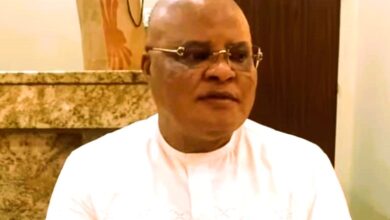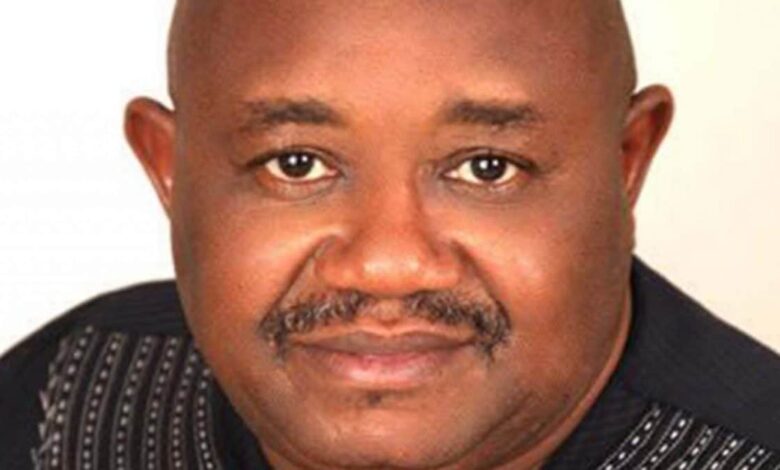
Koko Tochukwu
A former governorship candidate of the All Progressives Congress (APC) in Abia State, Dr Nyerere Chinenye Anyim, has urged the people of the South East to massively support President Bola Ahmed Tinubu in the 2027 presidential election, describing it as a strategic pathway for the zone’s return to the mainstream of national politics.
Speaking in a recent interview, Anyim said the 2027 election presents the South East with a critical opportunity to negotiate a more secure political future through decisive support for President Tinubu, warning that backing other candidates could further marginalise the region.
He maintained that President Tinubu has already demonstrated goodwill towards the South East through key infrastructural projects and political appointments, stressing that re-electing him in 2027 would enable the zone to benefit even more.
According to him, “President Bola Tinubu will be re-elected in 2027. It is left for the people of the South East to join the train, vote for him, negotiate a good political future and return fully to the mainstream of national politics, or waste their votes on candidates who will isolate the zone and drag it backwards.
“Our political future depends on us. The Igbo say that you lie on your bed the way you dress it. National positions are not given on a platter; you work for them. In politics, you must work for what you want. The Igbo must work for it.”
Anyim noted that the APC has continued to gain strength in the South East since the 2019 and 2023 elections, describing the party as increasingly becoming the preferred political platform in the region.
He expressed confidence that South East voters, having seen the impact of the Tinubu administration, would support his re-election.
“If we are sincere with ourselves, the situation we experienced in previous years was very bad. Today, however, there is light at the end of the tunnel. We are witnessing improvements and developments we did not see before this administration came into power,” he said.
He cited the establishment of the South East Development Commission, the progress on the Enugu–Port Harcourt Road, and major national projects such as the Lagos–Calabar Coastal Highway as clear indicators of renewed federal attention to the zone.
“There are far more infrastructural projects in the South East today than before, and this is happening less than four years into this administration. By the time President Tinubu completes eight years, the South East will see even greater development,” Anyim added.
The former APC South East National Vice Chairman also argued that the challenges currently facing Nigerians predate the APC administration, noting that the Tinubu-led government inherited many of the problems and has begun addressing them.
He further commended President Tinubu for increasing financial allocations to state governments, which he said has strengthened governance at the sub-national level.
“Tinubu deserves commendation. The APC-led federal government has empowered governors across the country with increased funding. Many states are experiencing what can best be described as a financial windfall. With these resources, governors have no excuse not to perform. Only a wicked governor would receive such support and still fail the people,” he stated.
Anyim concluded that the South East stands to benefit significantly from these policies, adding that governors now have ample resources to deliver good governance under the Tinubu administration.